
Why were Canadian troops sent to Hong Kong?
By late 1941, relations between Japan and Britain had deteriorated. There was fear among British government and military officials that Japan would declare war on them and attack their colonial possessions in East Asia. Many in the British military believed that sending reinforcements to their colonial garrisons would deter Japan from starting a war in the Pacific.
It was at this point the process that sent Canadian troops to Hong Kong began. Canadians came to be considered for the defence of Hong Kong because of Brigadier Arthur Edward Grasett, the former commander in Hong Kong, who was returning to Britain through Canada. During his journey he met with Canadian Chief of General Staff Major-General Harry Crerar and Canadian Minister of Defence J.L. Ralston. The nature of these discussions is not fully known but given what followed it is very likely that the possibility of Canadians reinforcing Hong Kong was discussed.
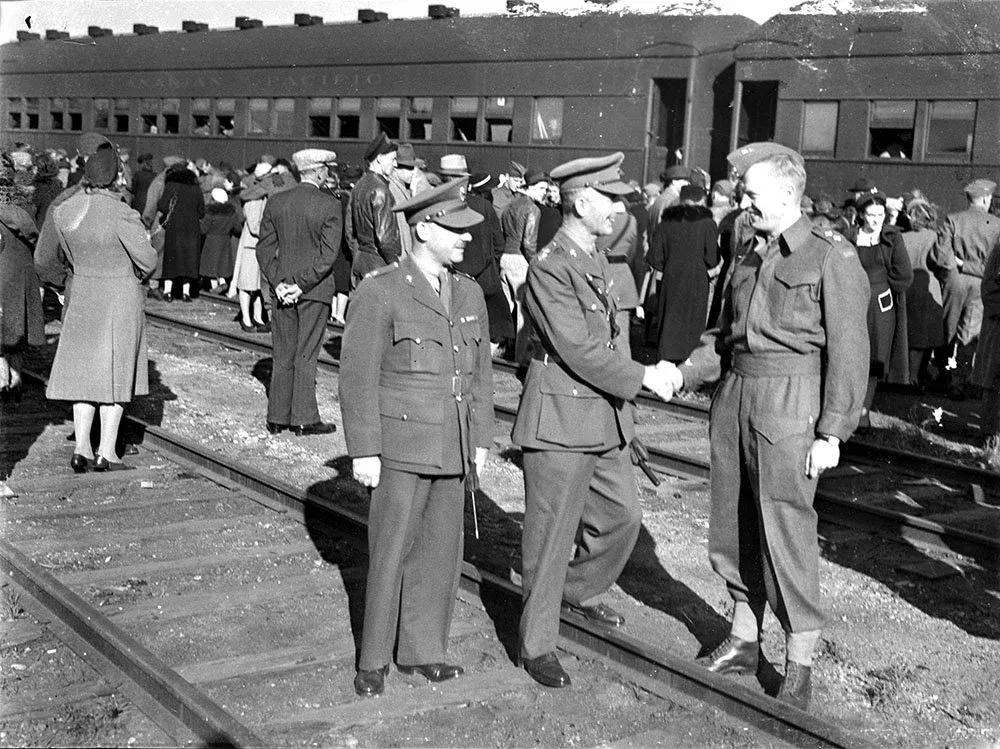
Upon reaching Britain in early September 1941, Grasett suggested to the British Chiefs of Staff that Canadian troops could reinforce Hong Kong. The Chiefs of Staff accepted the suggestion and on 19 September, the British Dominions Office cabled Ottawa. Shortly after, and with little debate, the Canadian War Cabinet Committee accepted.
Crerar selected the Winnipeg Grenadiers and Royal Rifles of Canada to form the core of "C" Force — the name given to the Canadian reinforcement. It is often believed these units were labelled as unfit for service. This was not entirely true: the policy was that units returning from overseas assignments had to undergo refresher training before being sent overseas again, and neither unit had completed this training when selected.
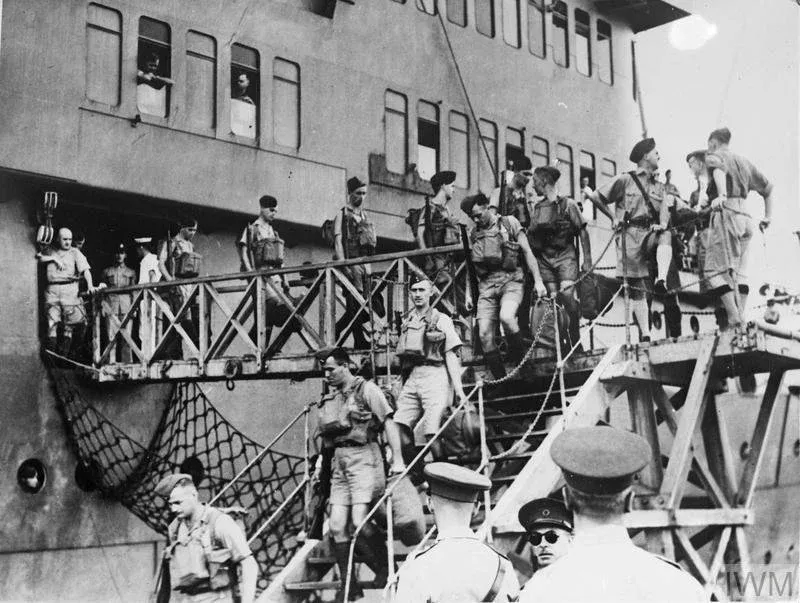
"The war declared imminent. Orders have been received to stand by positions. All troops to battle positions. Canadian troops ordered to evacuate from Shamshuipo and take up battle positions on Island." — War Diary of "C" Force, December 7, 1941
The Battle of Hong Kong
The Canadians arrived in Hong Kong in late November 1941, giving them little chance to acclimatize. The battle began on 8 December 1941 with the Japanese attack on the mainland portion of the colony, the New Territories. The Gin Drinker's Line — expected to stall a Japanese attack for an extended period — fell within a day, forcing a retreat to Hong Kong Island, completed by 11 December.
Japanese troops landed on Hong Kong Island and quickly pushed into the interior, leading to fierce fighting at the Wong Nei Chong Gap — the location of some of the most intense combat experienced by Canadians. Brigadier J.K. Lawson, commander of "C" Force, was killed on 19 December. "D" Company of the Winnipeg Grenadiers was cut off but stubbornly defended their position for several days before surrendering.
The fighting was defined by counterattacks. The island's hills were critical for controlling movement along its roads and changed hands frequently. As the battle raged on, the garrison's counterattacks became increasingly futile — Canadian troops would fight to gain a hilltop, only to retreat when exhausted, taking casualties that could not be replaced.
A final counterattack on Christmas Day — "D" Company of the Royal Rifles attacking Stanley Village — symbolizes the Canadian struggle at Hong Kong. Initially the Canadians pushed the Japanese out of their positions, but Japanese equipment and numerical advantage forced them back with heavy casualties.
Hong Kong's garrison surrendered on Christmas Day 1941. A total of 290 Canadians died in the battle. The entire garrison suffered 4,413 casualties. The Japanese lost 675 killed and 2,079 wounded.
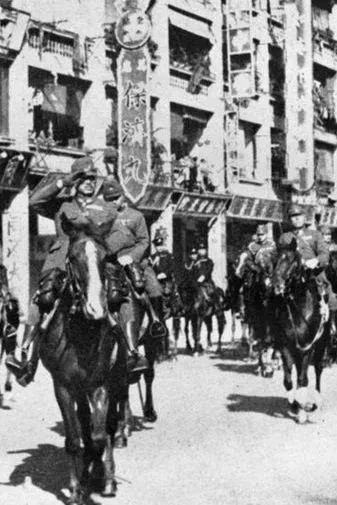
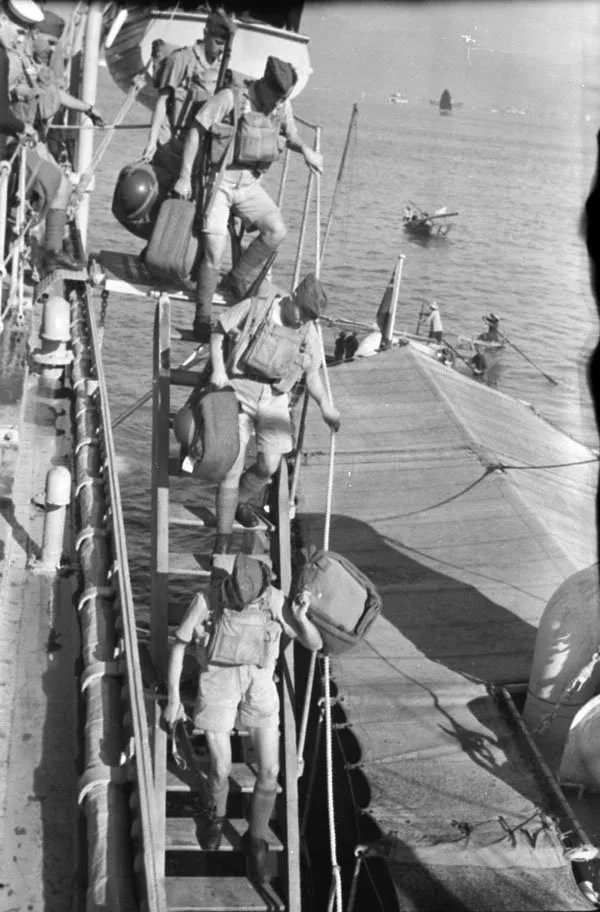
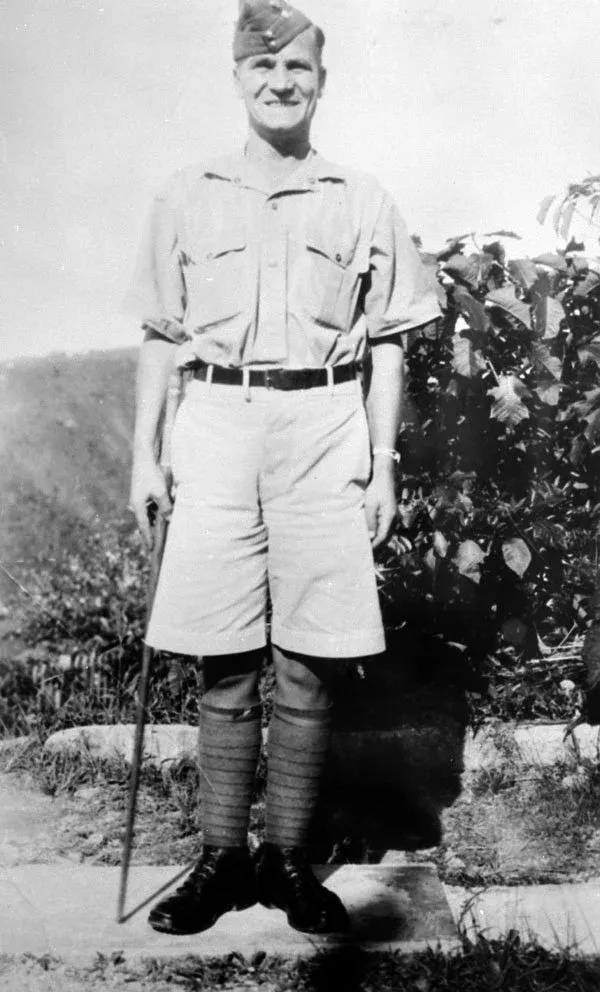
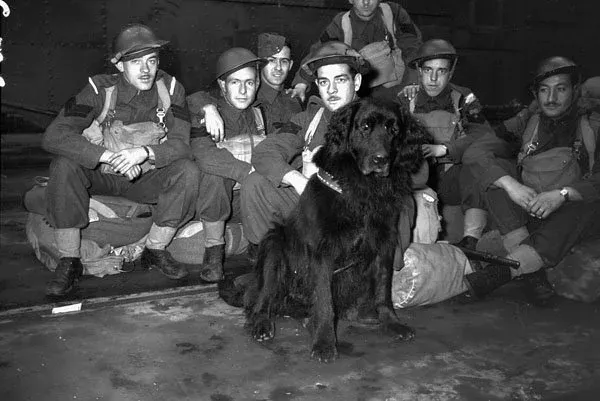
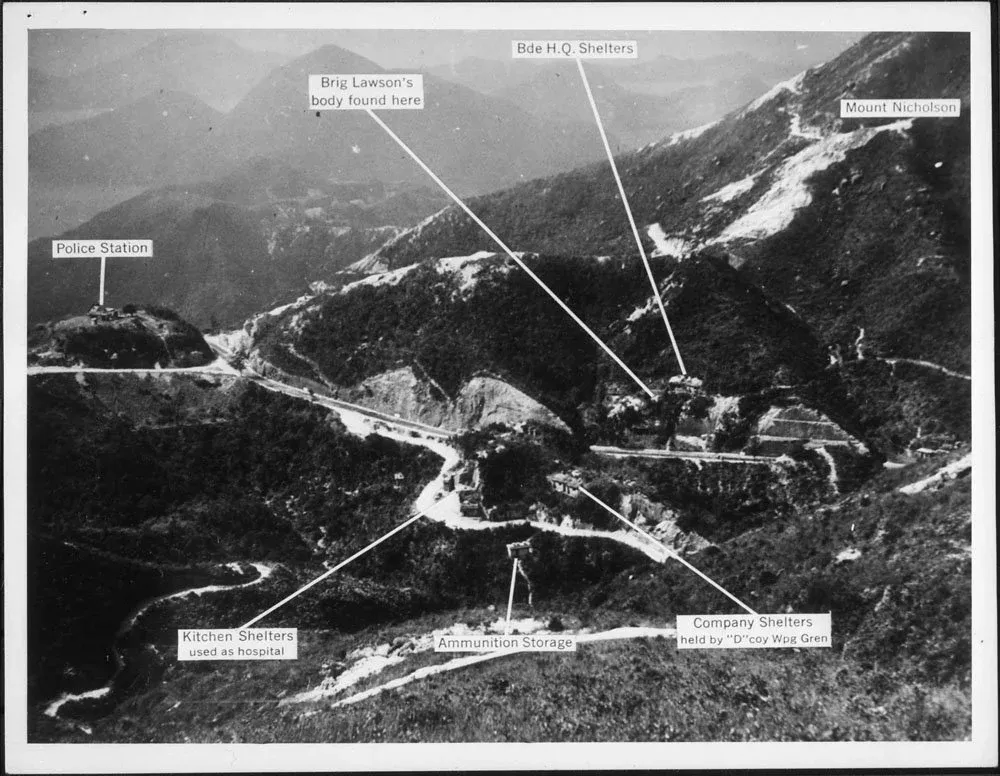
Battle of Hong Kong Story Map
Hong Kong Defence Map
After the Battle
The cessation of hostilities did not stop Canadians from dying. The Canadians were subjected to nearly four years of brutal conditions in Japanese prisoner of war camps. Conditions quickly deteriorated due to overpopulation and Japanese negligence. Many died from diphtheria, dysentery, typhoid fever, and malnutrition.
The Japanese also executed Canadian prisoners: in August 1942, Sergeant John Payne, Corporal George Berzinski, Private J.H. Adam, and Private P.J. Ellis were recaptured following an escape from the Sham Shi Po camp and killed. Some of the worst punishment was doled out by Kanao Inouye — a Canadian-born Japanese soldier from Kamloops, nicknamed the "Kamloops Kid." He was executed for treason by the Canadian government after the war.
Starting in 1943, Canadians were sent to Japan to work as slave labourers in mines, factories, ports, and rail yards. In a deliberate act of sabotage, some Canadians shut down the Yokohama shipyard by burning all its blueprints. Prisoners began to be liberated in September 1945 following the Japanese surrender. A further 280 Canadians died in captivity.
Many Hong Kong veterans suffered from alcoholism, psychological issues, and general poor health upon their return — and for years afterward. Many were denied proper care by the Canadian government, an error only rectified after most of the veterans had passed away.
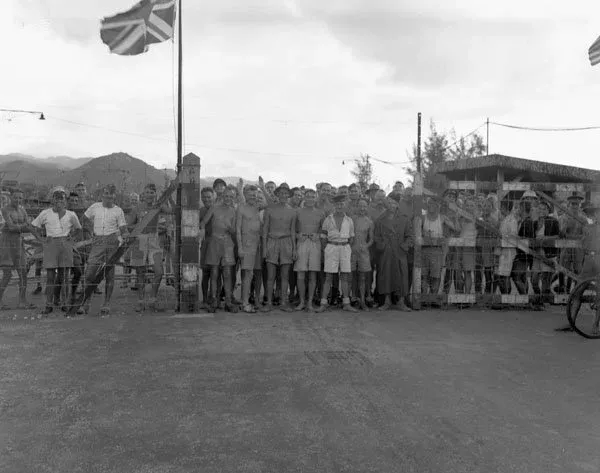
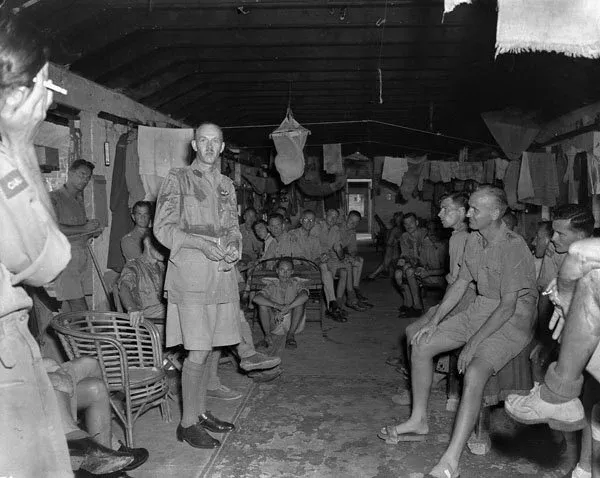
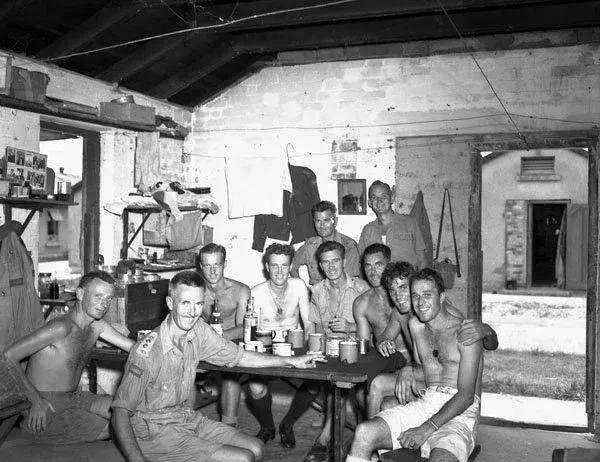
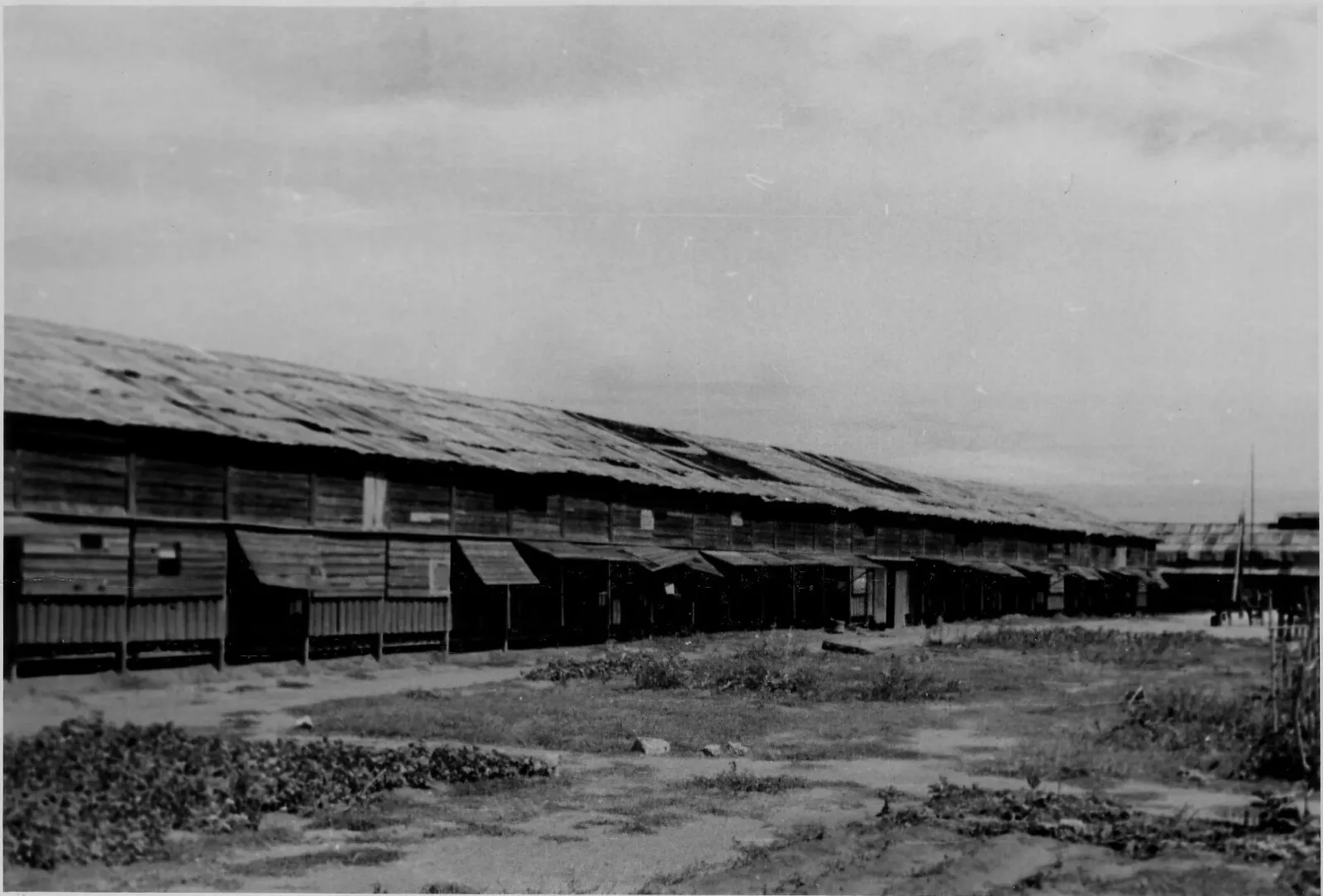
"At 1605 hours T/Lieut-Col. Lamb, R.E., Wing-Commander Bennett, R.A.F. appeared at Battalion H.Q. with a message from the G.O.C. ordering Lieut-Col. Stewart to proceed under a flag of truce to the H.Q. of the Japanese to surrender and attempt to stop the fighting." — War Diary of 1st Bn Middlesex, December 25, 1941
Force C Personnel Database
Additional Resources
Project '44 is thankful for the support of both the Hong Kong Veterans Commemorative Association (HKVCA) and Dr. Kwong from Hong Kong Baptist University, whose team created the "Battle of Hong Kong 1941: a Spatial History Project." Both organizations provided invaluable data to help build our web maps, generate war diaries, and build the personnel record database.

The role of the HKVCA is to educate all Canadians on the role of Canada's soldiers in the Battle of Hong Kong and on the effects of internment on both the soldiers and their families.
Visit HKVCA →
The spatial history project "Hong Kong 1941" uses GIS to build a web map about the Battle of Hong Kong and a database of British military installations during the Second World War.
Visit HKBU Project →