A Project '44 Case Study

Sgt. Moe Hurwitz, DCM, MM

Sergeant Canadian Grenadier Guards (22nd Canadian Armoured Regiment) Born 28 January 1919, Montreal · Killed in action 26 October 1944, Netherlands

By Ellin Bessner, David O'Keefe & the Project '44 Team 9 min read

A Jewish hockey player from Montreal who turned down a Boston Bruins tryout to enlist. "There's no time to play hockey when millions of my brothers are getting killed in Europe." He earned the Military Medal at Cintheaux, the Distinguished Conduct Medal at Philippine, and was last heard from on a tank wireless outside Wouwesche Plantage: "I seem to be in a bit of a spot. I am going forward. Follow me when you can."

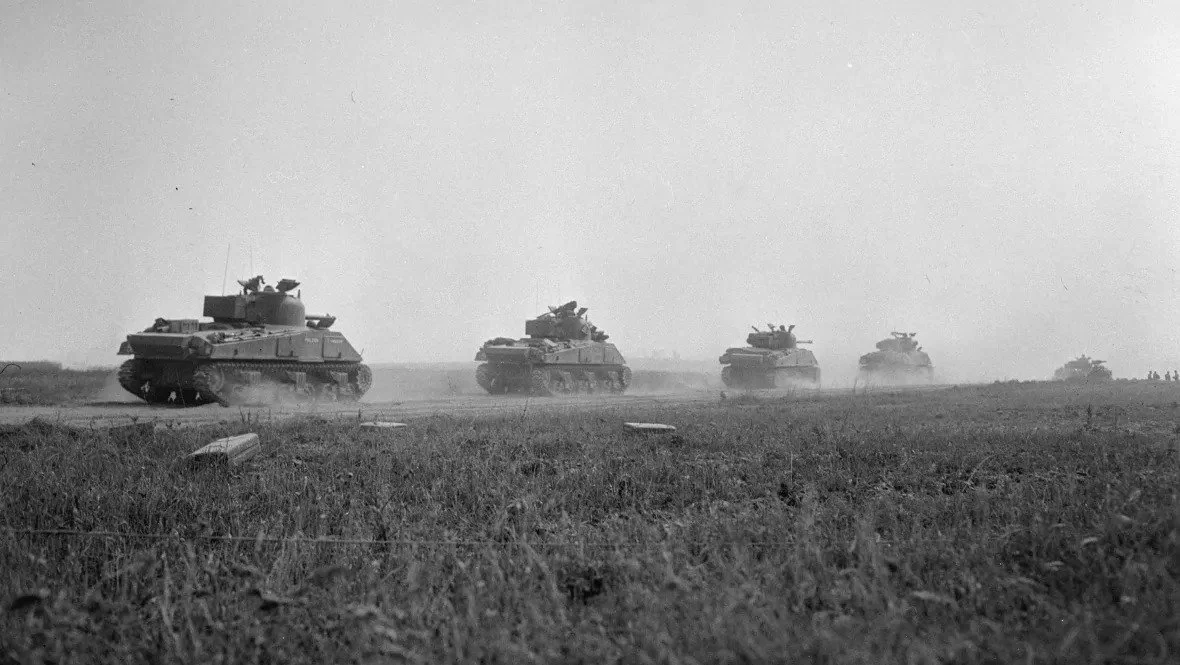
Tanks of the Canadian Grenadier Guards on the move during Operation Totalize
I

A boy from Lachine

1919–1940
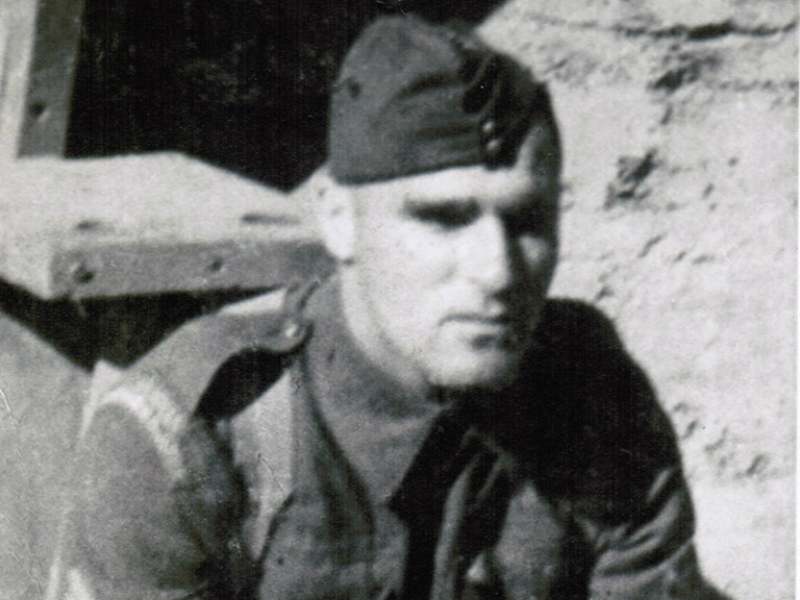
Sgt. Samuel "Moe" Hurwitz, DCM, MM — Canadian Grenadier Guards.
Samuel Moses "Moe" Hurwitz was born on January 28, 1919, the eighth of thirteen children of Jewish immigrants Bella and Chaim Hurwitz of Montreal. His parents had each arrived in Canada at the beginning of the 20th century to escape anti-Semitic pogroms in Tsarist Russia. Moe grew up in Lachine, the industrialized western end of Montreal, where his father ran a hauling company — first with horses and carts, later delivering ice cut from the frozen St. Lawrence River. By 1936, the family had moved to St. Lawrence Boulevard — "The Main" — where Montreal's Jewish community was concentrated. Moe spent his summers rowing and his winters on the ice, playing right wing and defence for the Montefiore Red Wings, an all-Jewish team in the Mount Royal Intermediate League. By 1940 he was centre for the Lachine Rapides in the Quebec Provincial Senior Hockey League and had been noticed by scouts for the Boston Bruins of the NHL — where Jewish players were almost unheard of. He turned the tryout down. *"There's no time to play hockey when millions of my brothers are getting killed in Europe,"* he told his family. Two days after France surrendered, on June 24, 1940, Moe walked to the Canadian Grenadier Guards armoury on Esplanade Avenue and enlisted.
II

Bovington

1942–1944
By October 1942 he was in England as a sergeant with the 22nd Canadian Armoured Regiment. He qualified as a tank crew commander "with distinction" at Bovington. In April 1944 his brother Harry, serving on HMCS *Athabaskan*, was torpedoed off the French coast and taken prisoner. The news made Moe more determined than ever to get into combat.
III

Cintheaux

8 August 1944
He made his combat debut on August 8, 1944, in Operation Totalize — the largest Canadian operation of the European war. At Cintheaux that day, Moe's troop of four Sherman tanks was ordered to attack the German position "at all costs." In what Lt. Ivan Phelan called a "brief, brilliant and decisive action," the troop knocked out eleven tank destroyers and anti-tank guns without a single casualty. When German infantry regrouped, Moe leapt from his tank, Sten gun in hand, and — in Phelan's words — *"with a mighty shout, dashed up and down the hedge rooting prisoners out of their slit trenches."* A burning German tank destroyer exploded nearby, killing one Guardsman and wounding five including Moe. Pinned under a fallen tree with singed hair and burned legs, Moe dug himself out, grabbed his Sten, and finished rounding up the Germans. He was awarded the Military Medal for that day.
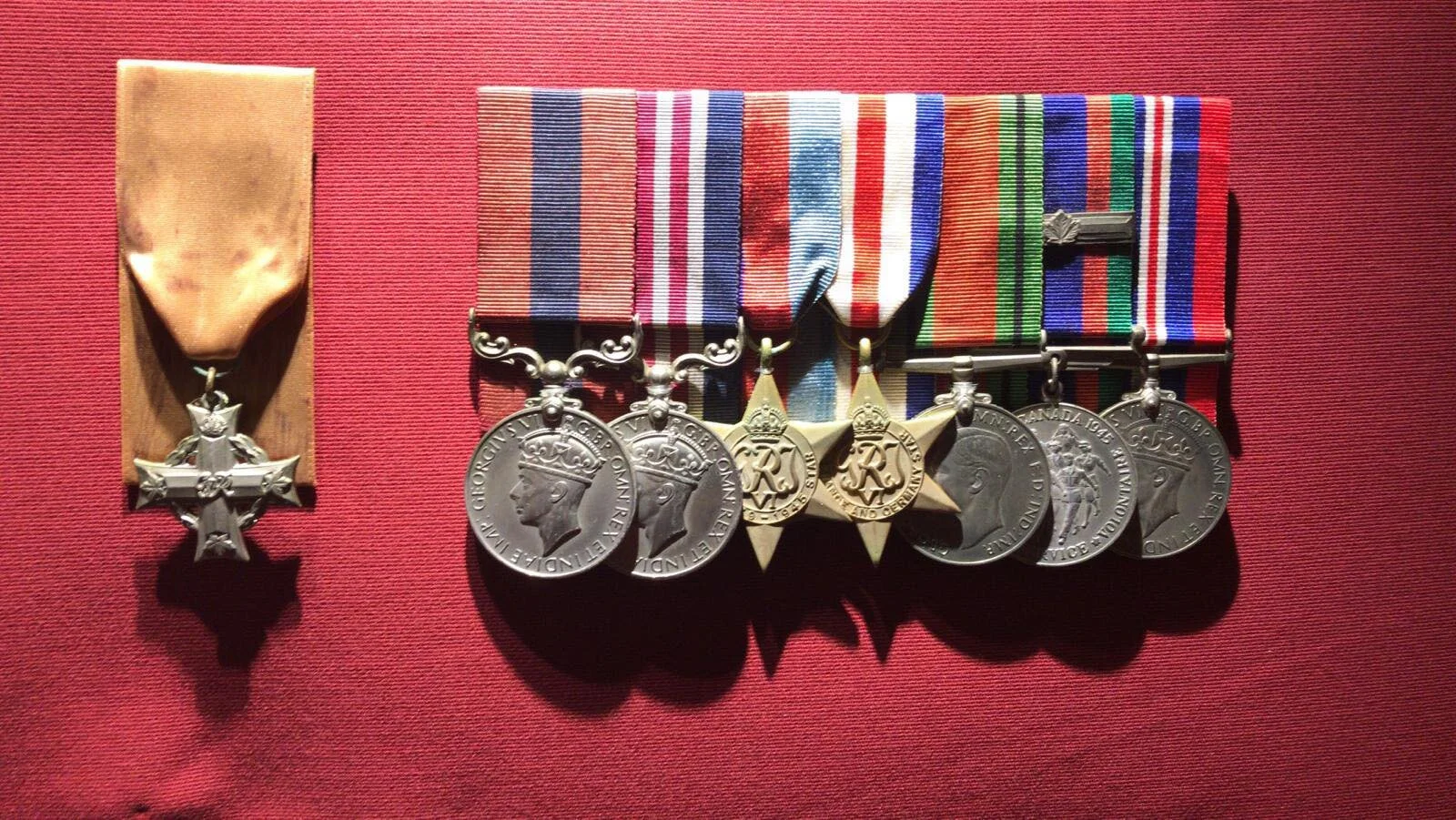
The Distinguished Conduct Medal and Military Medal — both awarded to Sgt. Hurwitz within six weeks of each other.
IV

Philippine

September 1944
Six weeks later, at Philippine in the Scheldt, he did it again — charging two German machine-gun positions alone, then crawling fifty yards through a ditch under fire to drag a wounded lieutenant and his trapped crewman to safety after his own tank "Geraldine" was knocked out. He was awarded the Distinguished Conduct Medal. Many in the regiment expected the Victoria Cross.
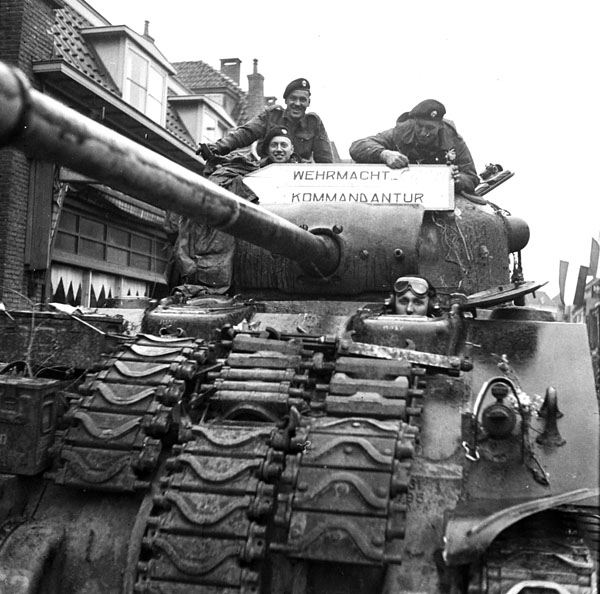
Canadian Grenadier Guards Tank.
V

Wouwesche Plantage

24–26 October 1944
On October 24, 1944, near the Dutch hamlet of Wouwesche Plantage, Moe's tank led an attack into the town before dawn. When the tank behind him was disabled, cutting him off, he radioed back: *"I seem to be in a bit of a spot. I am going forward. Follow me when you can."* Five minutes later, there was no answer. He was listed as missing for five months. In March 1945, the Germans confirmed he had died of wounds in a hospital near Dordrecht on October 26, 1944 — two days after he disappeared. He had been shot through the right lung. A fellow prisoner, captured the same day, sat with him the night he died: *"In his delirium, he kept reliving his last tank battle, shouting commands over his tank radio to the driver and gunner directing fire."* When the Canadian army gathered Moe's effects to send home in January 1945, the inventory included seventeen handkerchiefs. No one knows why.
VI

Bergen-op-Zoom

1945 and after
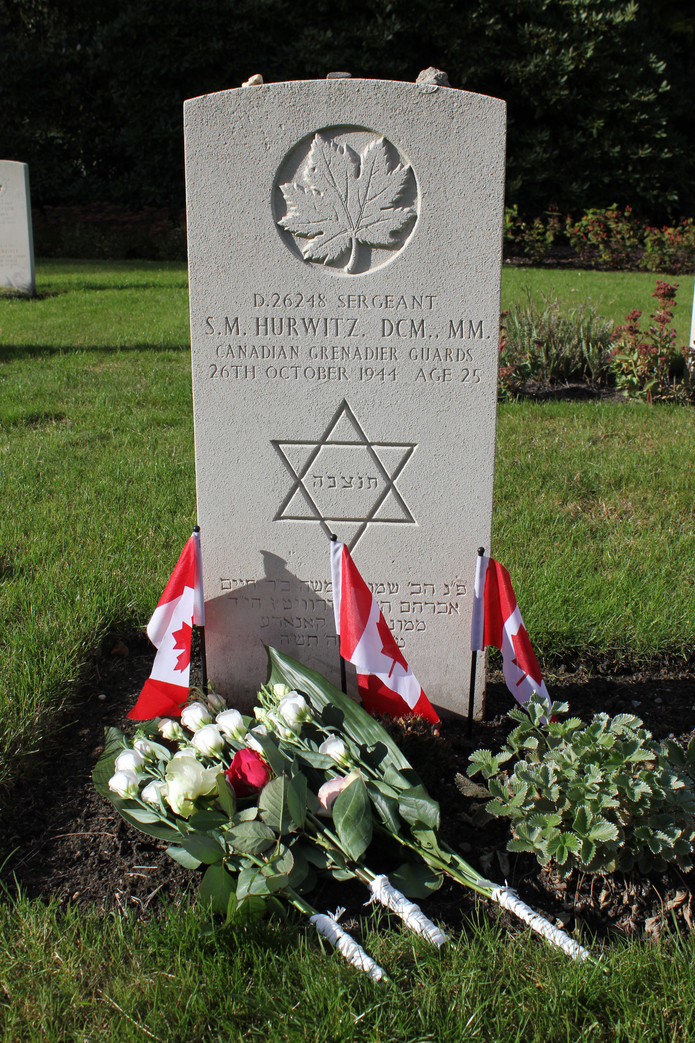
His brother Harry, liberated from the German POW camp at Marlag und Milag Nord in the spring of 1945, made it to England and learned there that Moe was dead. Harry was devastated but not surprised. Moe had told his brothers before he shipped out: *"Don't worry, Harry, I won't be back. You look after yourself."* Moe's remains rest at Bergen-op-Zoom Canadian War Cemetery in the Netherlands. The headstone is marked with the Star of David — eventually, after a letter-writing campaign when the army first installed a cross by mistake. The Hurwitz Cup is still awarded each August to the top army cadet marksman at the Connaught Ranges near Ottawa. Nearly 17,000 Canadian Jews served in the Second World War. Moe is one of the nearly 450 who didn't come home.
Sgt. Moe Hurwitz's headstone at Bergen-op-Zoom Canadian War Cemetery, Netherlands — marked with the Star of David.

Piecing the Story Together

For decades, the story of Sergeant Moe Hurwitz lived in pieces — in a commemorative pamphlet written by Major Ivan Phelan, in the archives of the Canadian Jewish Congress, in the memories of his family, in the citations for his two gallantry medals. Project '44 brought those pieces together on a map.

Working with historians Ellin Bessner and David O'Keefe, the Canadian Grenadier Guards Foundation, and the Hurwitz family, we traced Moe's war day by day — from the dust and burning tanks of Cintheaux in August 1944, through the flooded polders of the Scheldt in September, to the dark road outside Wouwesche Plantage where he was last heard on a tank wireless. Every position on the map comes from the war diary of the Canadian Grenadier Guards, cross-referenced against after-action reports, personal letters, and the testimony of the men who were there.

The result is an interactive story map that lets you follow Moe's tank "Geraldine" across Normandy and the Netherlands — and stand, on a modern map, in the exact places where he fought.

Credits

Written by Ellin Bessner, David O'Keefe, and the Project '44 team.

Story map sponsored by the Canadian Grenadier Guards Foundation. Source material from the Hurwitz family, Library and Archives Canada, and the Canadian Jewish Archives.

Further Reading

Sources

  1. War Diary, Canadian Grenadier Guards (22nd Canadian Armoured Regiment), August 1944 – October 1944. Library and Archives Canada, RG 24.
  2. Phelan, Ivan. Commemorative pamphlet on Sgt. S. M. Hurwitz, DCM, MM.
  3. Citations for the Distinguished Conduct Medal and Military Medal awarded to Sgt. S. M. Hurwitz.
  4. Hurwitz family papers, courtesy of the Hurwitz family.
  5. Canadian Jewish Archives, Montreal.