War Production
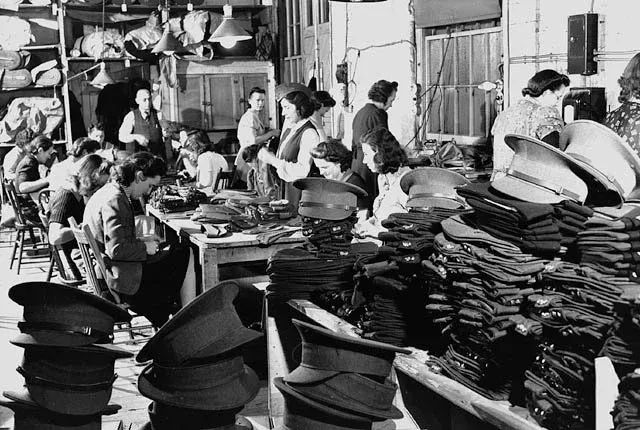
Upon the outbreak of the Second World War, Canadian industrial manufacturing was not geared toward the production of military equipment. Canada's economy was also reeling from the effects of the Great Depression and had not yet recovered. The outbreak of war in September 1939 began a process that forever changed the Canadian economy and manufacturing. It took an extended period to convert Canadian manufacturing to a war footing — not reaching its peak until 1944 — but once this happened Canadian war production greatly contributed to Allied victory in the war.
Department of Munitions and Supply
To organize Canadian war production, Parliament created the War Supply Board in September 1939. It was restricted on purpose, with the concept of limited liability — the name later given to the Canadian government policy of limiting Canadian involvement in combat — still controlling Canadian conduct in the war. Weapons and equipment were slow in coming.
On the 9th of April 1940, coincidentally the day the Germans invaded Denmark and Norway, the Department of Munitions and Supply replaced the War Supply Board. The new department essentially controlled, directly or indirectly, all matters of war supply in Canada. It also coordinated all purchases made by British and other Allied governments in Canada. Shortly after this change, the German conquest of France and the Low Countries created further pressure to increase Canadian war production.
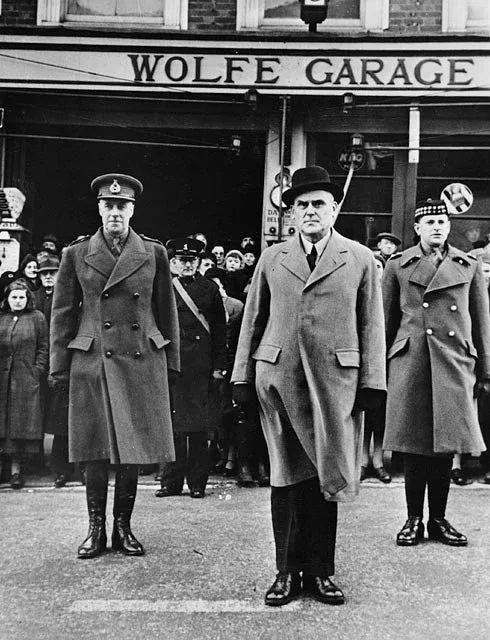
The Department of Munitions and Supply was headed by C.D. Howe, an American-trained engineer, former business owner, and Member of Parliament. Due to this position, along with other appointments he held, Howe became known as the "minister of everything."
On the 7th of August 1940, Howe was given the power to incorporate companies and to delegate to them any of his own legal powers and duties. Twenty Crown companies were created and worked under the department. The creation of these corporations avoided a large government bureaucracy, giving Canadian war production much-needed flexibility. The companies performed tasks such as manufacturing, purchasing and distributing materials, and supply regulation.
From coast to coast, factories were built to supply Canada and Britain
Arsenal of Democracy
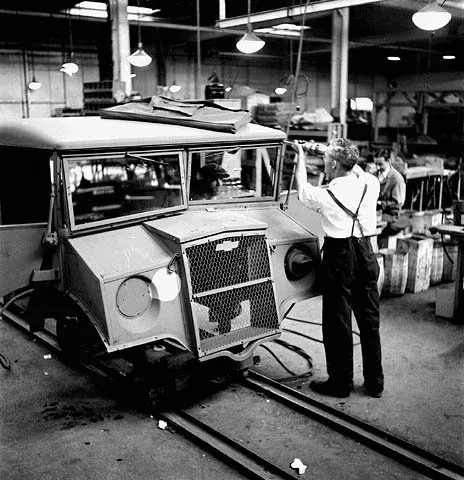
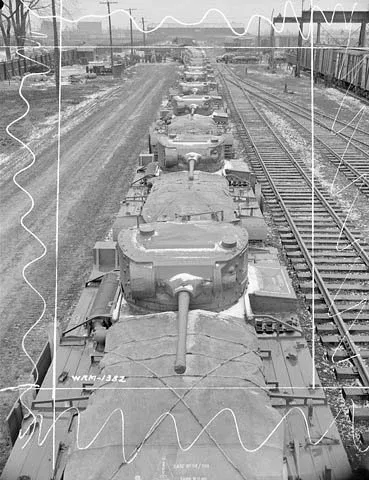
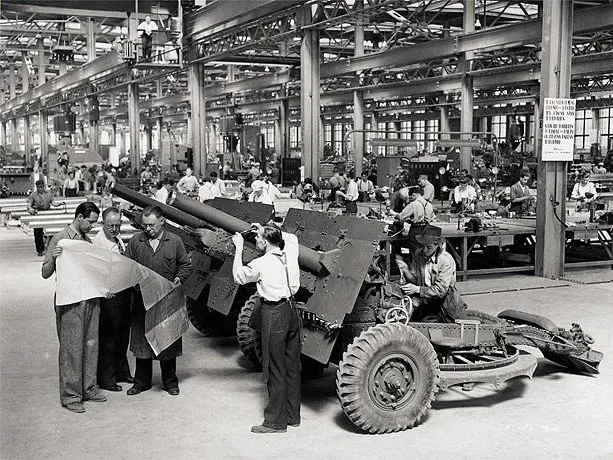
Trucks, Tanks and Guns
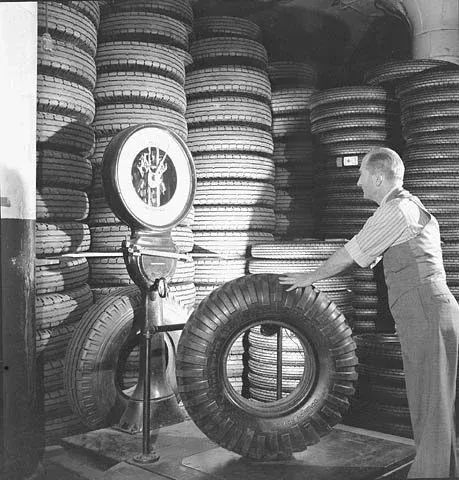
Over the course of the war, Canadian industry produced more than 800,000 military transport vehicles. 168,000 were issued to the Canadian military, while the rest went to allies, including Britain, the United States, and the Soviet Union. Tanks were also produced in Canada before the Allies decided to produce all Sherman tanks in the United States. As an example of Canadian tank production, the Canadian Pacific Railway constructed 788 Valentine tanks in Montreal. Some were shipped to Britain and the Soviet Union.
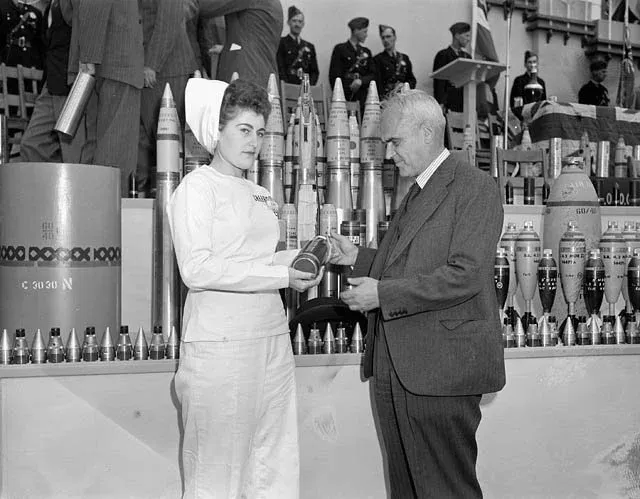
Canada also produced thousands of artillery pieces including field guns, anti-aircraft guns, and anti-tank guns. Millions of small arms such as rifles and machine guns, ammunition rounds, and the various other equipment and material needed to fight the war were made in Canada.
Naval Production
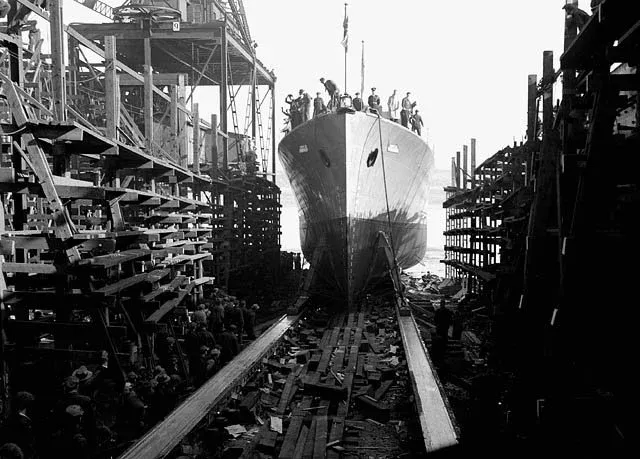
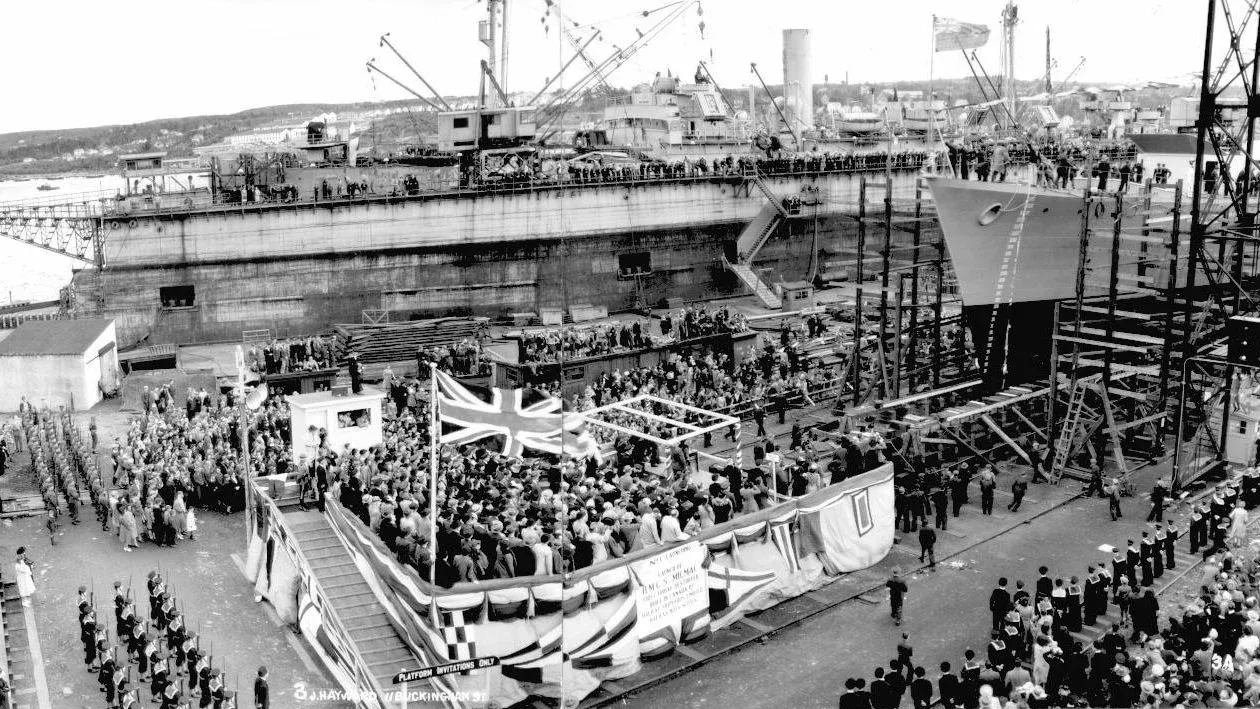
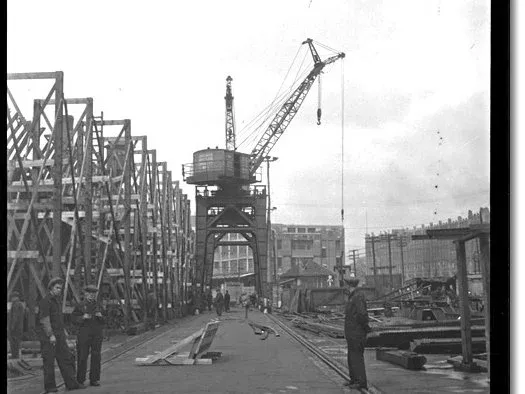
Some 57,000 individuals were employed in Canadian merchant ship building, which produced nearly 350 ten-thousand-ton ships during the war. A further 27,000 worked in naval shipbuilding, manufacturing destroyers, frigates, corvettes, and minesweepers. Ship building took place on both coasts as well as in the Great Lakes.
Aviation Production
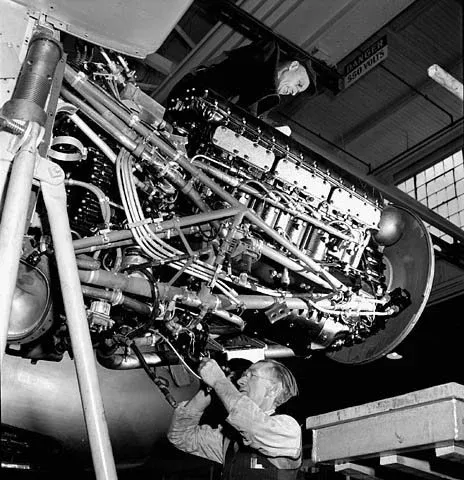
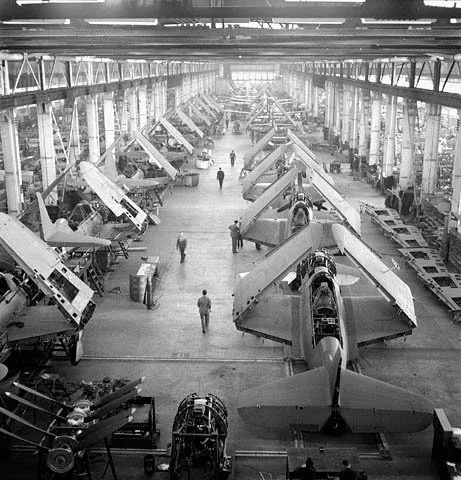
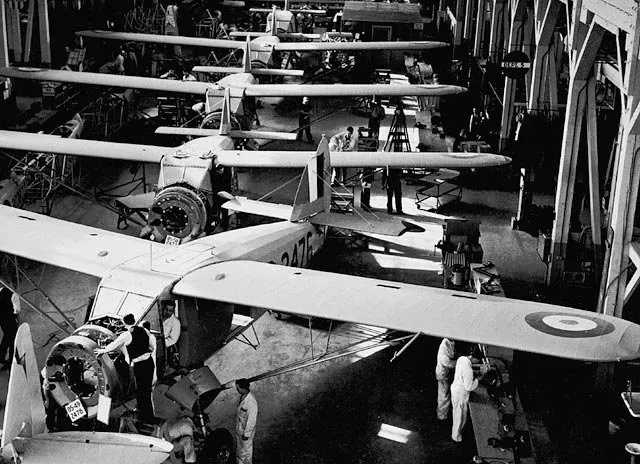
The Canadian aircraft industry went from extremely low levels of production before the conflict to thousands of aircraft assembled a year by the end of the Second World War. The industry also produced parts and airframes. At its peak, the industry employed 120,000 men and women. Canadian factory space for aircraft production dramatically increased from 500,000 square feet before the war to a high of 14,000,000 square feet.
By the end of the war, Canada had assembled more than 16,000 aircraft. The aircraft assembled included, but were not limited to, Lancaster bombers, Hurricane fighters, Mosquito fighter-bombers, Catalina flying boats, and Harvard and Cornell trainers. These supplied the Royal Canadian Air Force and Royal Air Force.
Resource Production
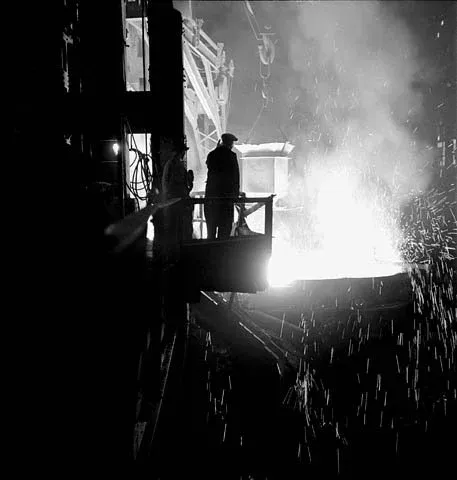
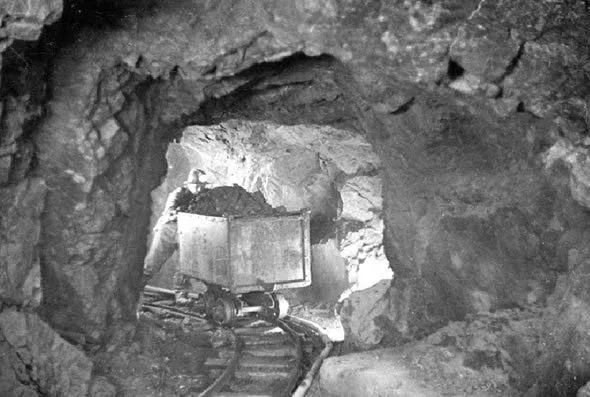
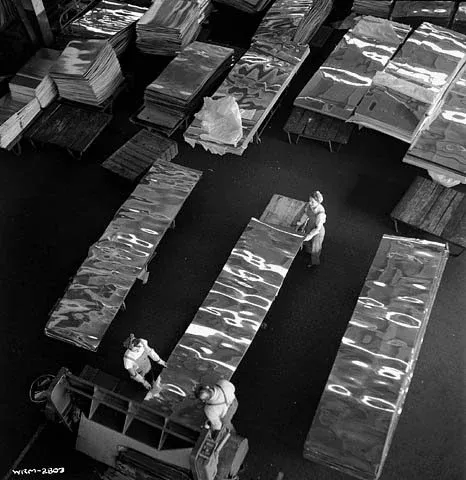
Although the country was largely agricultural at the time, it had a well-developed mining and forestry sector, and these industries were vital to the war effort. One of Canada's most vital contributions was aluminium from Arvida, Quebec — the largest aluminium-producing unit in the world. Canada produced 40% of all Allied production of aluminium, which was a vital metal for aircraft production. Canada also supplied uranium to the United States for use in the Manhattan Project, as well as lumber and steel for war production. In total, Canadian resource production played a significant role in the Allied victory, and the country's economy boomed as a result.
The Workforce
Working on the Home Front
Out of Canada's population of 11.3 million, approximately one million people worked in essential war industries during the war. Another two million worked full-time in essential civilian industries, such as agriculture, communications, and food processing. Thousands of women also worked in war production. Some childcare was provided by the Canadian federal and provincial governments, but it only went so far — the burden of childcare often fell on family members.
Wages, job postings, and employee job changes were all highly regulated by the Canadian government. War production benefited Canadian workers as the average yearly wage increased dramatically during the war, rising from $956 in 1938 to $1,525 in 1943. There was as much overtime as people wanted, and many worked fifty or even sixty hours a week. Wartime Canadians ate better and spent more, despite food rationing and inflation controls, than they had in the 1930s.
Canada's war production played an important role in the air, on the sea, and on the ground on all fronts across the world in the Second World War. Historian Tim Cook observed that by the end of the war, Canada had produced millions of shells, thousands of airplanes, hundreds of warships, and hundreds of thousands of trucks — more than Germany, Italy, and Japan combined — for the Allied nations at war. Canada was fourth in terms of wartime production behind the United States, the United Kingdom, and the Soviet Union. Canadian war production took time to develop but once it did, its role in Allied victory is undeniable.